
First-Time Home Sellers
Selling Your First Home in Cypress, Buena Park, and Anaheim
What happens, in what order, and how to do it while you buy the next one.

Updated September 2026
I am Austin Criss, a REALTOR® with RE/MAX Tiffany, and I list and sell homes in Cypress, Buena Park, Anaheim, and around Orange County. A lot of my sellers are selling for the first time. They bought a starter home, it got them this far, and now it is too small or the layout does not work anymore. That is a good problem to have, and it comes with a question that stops people cold. Do I buy first, or do I sell first? You do not have to be ready to list to start working that out. This page covers what selling actually looks like, and how buying and selling at the same time works.
When should you start planning your sale?
You do not have to be ready to list. A year out is not too early, and it is when the decisions that actually move your number get made.
It gives you time to figure out your next step, which is the real decision. Where are you going, what does it cost there, and does that change what you should do with this house. It gives you time to talk to a lender before you are under pressure, because what you qualify for determines whether you can buy first or need to sell first.
And it gives you time to decide what is worth fixing. Home improvements are one of the best returns you can get when selling your home, but only if it makes sense and you are not spending more than what you will be getting in return. I walk through the home and give you a list of what would actually pay you back. Sometimes the answer is that you should not spend anything, and I will tell you that too.
What are the steps to selling your first home?
Ten steps from the first conversation to closing.
- Consultation and strategy. We sit down, review your goals, your timeline, and your home, walk through the entire process, and build the plan.
- Home assessment and CMA. I run a full comparative market analysis using recent sales, active competition, and current buyer demand. Pricing right from day one is the most important decision we make.
- Prepare and stage. Before photos, I walk through and give you a prioritized list of what will make the biggest impact and what is worth your time and money.
- Pre marketing. Before we hit the MLS, we build interest so there are buyers waiting on day one.
- Photography and video. Professional photos and a video tour, covered by me.
- Launch. Your home goes live on the MLS and syndicates out across the major sites.
- Showings and open houses. I coordinate all of them, collect feedback after every one, and keep you updated weekly.
- Offers. I walk you through every offer in plain language. Price, contingencies, timelines, and anything that concerns me.
- Negotiate and accept. Protect your price, strengthen your terms, keep your position secure.
- Escrow to close. Inspections, appraisal, contingencies, final walk through. You show up ready to hand over the keys.
How long does selling take?
Two clocks.
The first is how long it takes to get an offer, and that is mostly about price and condition. The largest pool of qualified buyers will see your home in its first two weeks on the market. That is when the alerts fire, that is when the agents who have been watching for something like yours show it to their clients, and that is when you have the most leverage you will ever have. After that, buyer activity drops off and you start chasing the market instead of the other way around. Getting the price right before day one is most of the job.
The second clock starts when you accept an offer. From acceptance to close is usually 30 to 45 days.
What does selling cost, and what do you walk away with?
The sale price is not what hits your account. Four things come out of it first.
- Selling costs. Agent compensation, title, escrow, and transfer fees.
- Your mortgage payoff. Whatever is left on your loan.
- Anything you agreed to give the buyer. A closing credit, a repair credit, or a price adjustment after the inspection.
- What you spent getting it ready. Which is why the year of lead time matters.
What is left is your equity, and that is the number that decides everything about your next move. It is also the number people guess at, usually from an online estimate. Before you plan anything around it, get a real one.
The seller’s guide walks through the marketing, the pricing model, and the prep list in detail. Get the seller’s guide
Can you buy and sell at the same time?
This is the thing that keeps move up sellers stuck longer than anything else. Not the money. Not the market. The logistics of doing two things at once.
The question is not really when. It is how you stay in control. When you feel rushed, you overpay, you accept a bad offer, or you talk yourself out of the right house. Everything below is about buying yourself room to think.
There are four ways people do it.
Sell contingent on finding a replacement property
You list your home, but the sale depends on you finding your next one. This protects you the most, because the ball is in your court in terms of selling your home. The catch is that once your home is in escrow, you have a limited amount of time to find the next one. If the market has a ton of listings and what you are looking for is not super niche, this can be a good option. If it is niche, the pressure is real.
Buy contingent on selling your home
You find the next house first and write an offer that depends on your home selling. This works best for most people because it lets you take your time finding the right property. Once you secure that property in escrow, you time it so you are listing your home at the same time. Because you have a limited window to sell, everything has to be locked and loaded. That usually means listing slightly under market value to drive multiple offers so the sale is close to guaranteed. The tradeoff is that a contingent offer is weaker than a clean one, and some sellers will pass on it.
Sell, rent, then buy
You sell, move into a rental or stay with family, and start your search with cash in hand and no deadline. If you do not mind moving twice and spending some money to rent, this is the safest and easiest option.
Buy first, sell after
You buy the next home, move on your schedule, and sell your old one empty instead of scrambling. No living in a house while strangers walk through it every weekend. This works if you have equity built up, your debt to income ratio is low, and you are willing to own two homes at the same time. That is the easiest option if your finances allow for it.
There are creative ways to do it beyond those four, but those are the four main ones.
The piece that decides which one is open to you is financing, and that is worth a conversation with a lender long before you list. If you are buying first, there are a few different ways to bridge the gap, and which ones you qualify for depends on your income, your equity, and your reserves. The guide walks through each one and what it costs. If you are buying and selling at the same time, the move up buyer guide walks through both paths and has a calculator for your own numbers.
If you have never bought a home before either, here is what buying your first home looks like.
What should you fix before you list?
What I am seeing in this market more than ever is that turnkey homes sell far quicker and for more money than ones that need work.
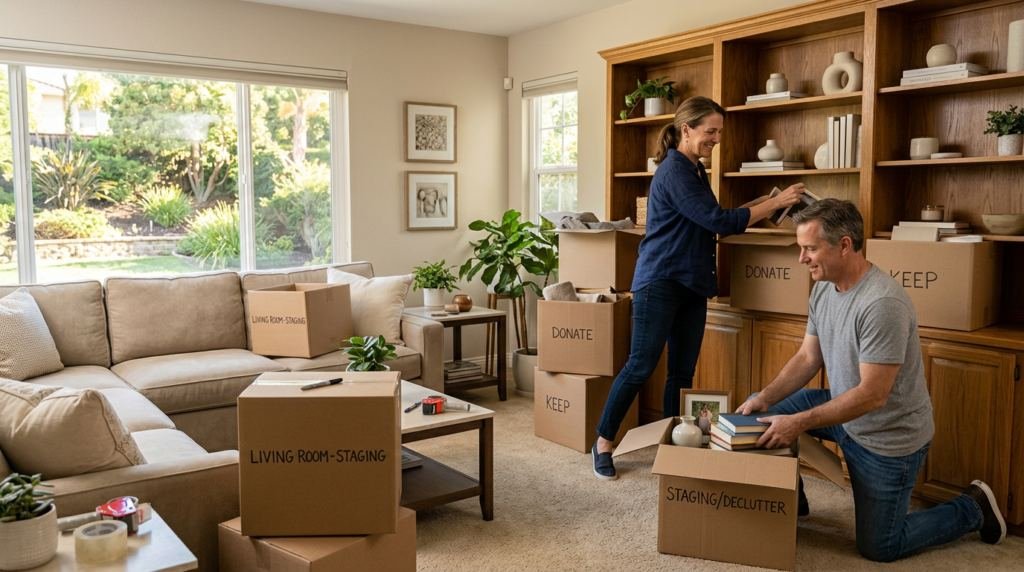
That does not mean redo the kitchen. It usually means paint inside and out, replacing flooring that is in old condition, freshening up the landscaping, changing outdated hardware, and handling the small fixes that would otherwise show up on an inspection report.
Buyers like walking into a property that is visually appealing and seems clean. They do not like walking in and seeing marks on walls and stains on the floor. It is about presenting the property the right way and playing off the property’s strengths. Each property has its unique characteristics and nuances. My job is to highlight the best things and showcase your home as the one.
Do not do anything major unless you are willing to sink a large portion of money, time, and energy into it. That only makes sense if you are seeing it as an investment project. The guide has the list I actually walk through, and what a reasonable budget looks like.
What happens when an offer comes in?
An offer is six decisions, and the price is one of them. When I walk you through an offer, these are the six things I am reading.
- Price. What they are paying.
- Money up front. Their deposit and their down payment. This tells you how serious and how solid the buyer is, and how much of their own money is at risk if they walk.
- Timing. When they want to close, and when they take possession. If you need to stay in the house after closing while you buy your next one, this is the term that does it.
- What stays with the house. What they are asking to be included.
- Contingencies. How long they have to inspect, appraise, and get their loan approved. That defaults to 17 days and can be negotiated shorter. It is also exactly how long you are off the market without certainty.
- Who pays what. Escrow, title, transfer taxes, the reports, and any credit they are asking you for.
Then you have three moves. Accept, counter, or decline. Most transactions involve a counter.
The highest price is not automatically the best offer. A slightly lower offer from a buyer with a large deposit, a short contingency period, and strong financing is often worth more than a high one that falls apart in three weeks.
One more thing on offers. Buyers sometimes attach a letter about themselves and their family. I recommend you do not read them, and you can instruct me not to pass them along at all. They feel nice, and they create a fair housing problem, because a decision that looks like it turned on who the buyer is instead of what they offered is the kind of thing that turns into a complaint. We decide on the terms.
What can go wrong after you accept?
This is the part nobody explains to a first-time seller, and it matters more if you are buying at the same time.
When you accept an offer, you take your home off the market and the buyer gets a window, 17 days by default, to do three things. Inspect the property. Get it appraised. Get their loan formally approved.
Any of those can come back and reopen the negotiation. The inspection can turn up something that has the buyer asking for a credit or repairs. The appraisal can come in below the price you agreed to. The loan can fall through.
If the buyer blows a deadline, you cannot cancel that day. You have to serve a notice to perform first, which gives them at least two more days to either remove the contingency or walk.
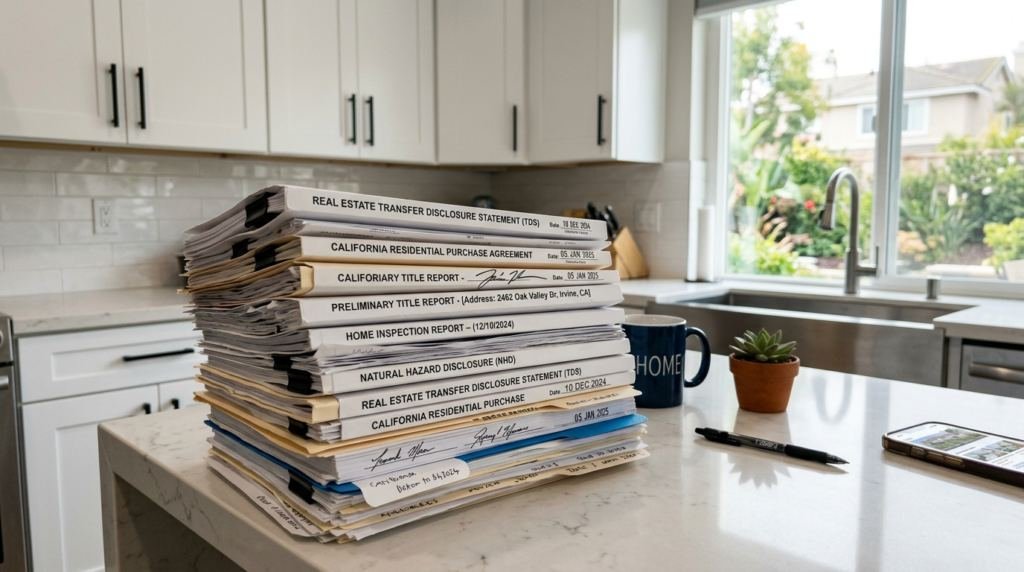
Your side has a clock too. You have seven days after acceptance to deliver your disclosures. If those go out late, the buyer gets a fresh window to cancel based on what is in them, which is a self inflicted wound I would rather you not have.
That is why the terms of the offer matter as much as the number, and it is why I care about the strength of the buyer’s financing before you sign anything. If your next purchase depends on this sale closing on time, the buyer’s contingencies are your risk, not just theirs.
Contingencies are part of the process and most transactions get through them without drama. But you should know going in that the deal is not truly firm on the day you accept.
What surprises first-time sellers?
You are not a first-time buyer anymore. You know what escrow feels like and you know what a bad inspection feels like, and now you are doing it twice at the same time. That is a lot. It is normal to feel it.
The other thing people underestimate is what it is like to live in a house that is for sale. Keeping it show ready, leaving for showings, strangers walking through your kids’ rooms on a Saturday. It is temporary and it is worth it, and it is still the part people complain about most.
Austin’s take
Here is what I tell my clients. When the stress hits, take yourself out of it and come back to the facts. You want a home that fits your life better, and you have the equity to make it happen. Do not overthink the small details, because that is a rabbit hole you can follow to the end of time.
Think macro, not micro. A slightly higher rate or a few weeks of overlap will not matter in five years. Being in the right home for your family will.
And the thing that is easy to forget in the middle of the numbers. The dream home is not only the house that checks your main boxes. It is the people in the house that make it a dream home. I know that sounds cheesy but it is very important to remind yourself of that in the middle of the juggle.
“Austin is very professional. We sold our home in July 2025. As the market was changing, Austin’s approach to the sale was spot on. The house was priced properly, there were three offers following the first weekend of showings. Resulting in a very qualified buyer. There were a few fixes that were requested by the buyer which Austin took care of quickly reassuring all parties that the work was satisfactory to everyone. We were extremely satisfied with Austin’s work and responsiveness.”
Curt M.
Where I work
I list and sell homes across North Orange County. Cypress, Buena Park, Anaheim, and the cities around them.
Common questions from first-time sellers
When should you start planning to sell your home?
About a year before you want to move. That year is what gives you time to decide where you are going, talk to a lender about financing your next purchase, and make the improvements that actually pay you back. Sellers who start three weeks out end up taking whatever the market gives them.
Should you sell your home first or buy the next one first?
It depends on your finances and how much overlap you can handle. Selling first is safer because you know exactly what you are walking away with. Buying first means moving once instead of twice, but you either carry two payments for a while or pull equity out of a home you have not sold. There is no single right answer, which is why the decision should be made early.
Can you stay in your home after it sells?
Yes. It is called a rent back, and it is one of the most useful tools in a move up sale. By default you give up possession when the sale records, so staying past that takes its own written agreement, a short form for 29 days or fewer and a longer one for 30 days or more. It has to be negotiated as part of the offer rather than asked for later, and the buyer of your home becomes your short term landlord for that stretch.
What does it cost to sell a house in California?
Agent compensation, title, escrow, and transfer fees come out of the sale price, along with your remaining mortgage payoff and anything you credit the buyer. What is left is your equity. The percentages vary by price point and by what gets negotiated, so get a real net sheet before you plan your next purchase around a number.
How long does it take to sell a house?
Two separate clocks. Getting an offer depends on price and condition, and most of the qualified buyers will see your home in the first two weeks it is on the market. Once you accept an offer, escrow usually runs 30 to 45 days.
What should you fix before selling?
Paint, flooring in poor condition, landscaping, outdated hardware, and small repairs that would otherwise show up on the inspection report. Turnkey homes sell faster and for more. Major renovations usually do not pay for themselves on a sale, and sometimes the right answer is to spend nothing and price accordingly.
Is the highest offer always the best offer?
No. Price is one of six terms in an offer. The deposit, the closing date, the possession date, what is included, the contingency periods, and who pays what all affect your bottom line and your risk. A slightly lower offer from a well qualified buyer with short contingencies is often worth more than a high offer that falls apart.
What happens if the buyer’s loan falls through?
If their loan contingency is still in place, which defaults to 17 days from acceptance, they can cancel and get their deposit back, and your home goes back on the market having sat for several weeks. After that contingency is removed, their deposit is at risk if they walk. This is why the strength of a buyer’s financing matters as much as their price, and it is the main reason a move up seller should not remove the contingency on their own purchase before their sale is solid.
What do you have to disclose when you sell a home in California?
Everything you know that materially affects the property’s value or desirability. In practice that means the Transfer Disclosure Statement, the Seller Property Questionnaire, a Natural Hazard Disclosure report, lead paint disclosures on homes built before 1978, and HOA documents if you are in an association. You have seven days after accepting an offer to deliver them, and you keep updating them if something new comes up before closing.
Get the seller’s guide
The guide goes deeper than this page. The full marketing plan for your home, how pricing actually works, the prep list I walk through, and what to expect from acceptance to closing.
By submitting this form you agree that Austin Criss may contact you by phone, text, or email about selling your home. Message and data rates may apply. You can opt out at any time.
Austin Criss, REALTOR®, RE/MAX Tiffany. DRE No. 02128057. 714.600.1176. austin@austincriss.com
Keep reading
- What buying your first home looks like
- Should you sell before buying in Cypress, CA?
- Rent-back agreement in California: staying after closing
- What California home sellers must disclose: TDS, SPQ, and NHD
- Capital gains tax when you sell a home in California
- Prop 19: how to transfer your property tax base
- About Austin Criss, REALTOR® with RE/MAX Tiffany