
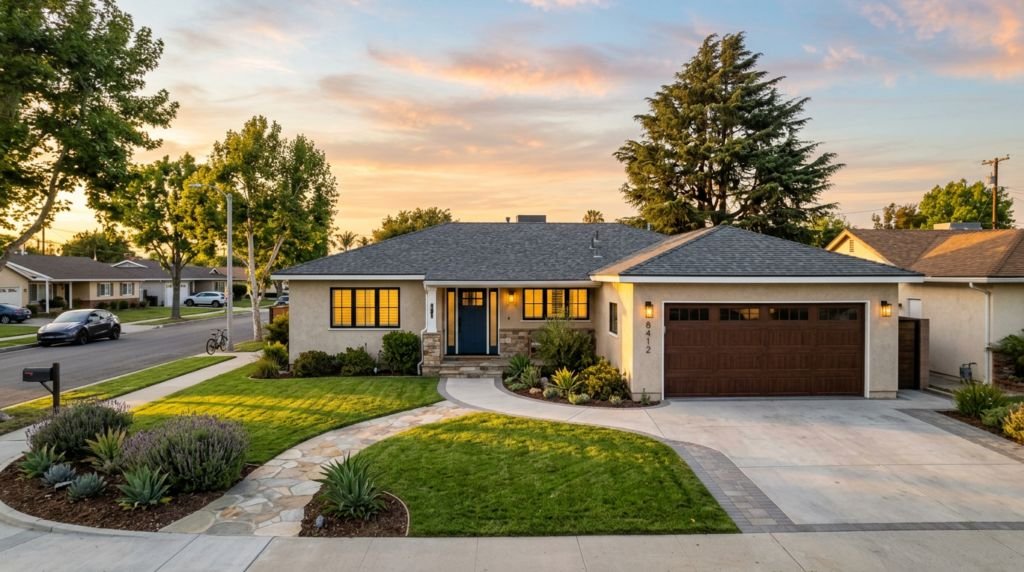
First-Time Home Buyers
Buying Your First Home in Cypress, Buena Park, and Anaheim
What happens, when it happens, and what it costs.

Updated September 2026
I am Austin Criss, a REALTOR® with RE/MAX Tiffany, and most of my clients are first-time home buyers in Cypress, Buena Park, Anaheim, and around Orange County. I was born and raised in North Orange County. My wife and I bought our own first home in 2024, with a toddler and another on the way, so I know what this feels like from the other side of the table. Some of my clients are buying next month. Some are two years out. Both are the right time to reach out. This page walks through what buying your first home actually looks like, from the first conversation to the day you get keys.
When should you start looking at homes?
You do not have to be ready to buy to start looking. A year out is good. Two years out is fine.
I help people all the time before they are ready. I get them pre-approved with my lender, set expectations of where the market is at, and explain the buying process, so when they are ready, they can hop in prepared and ready to go.
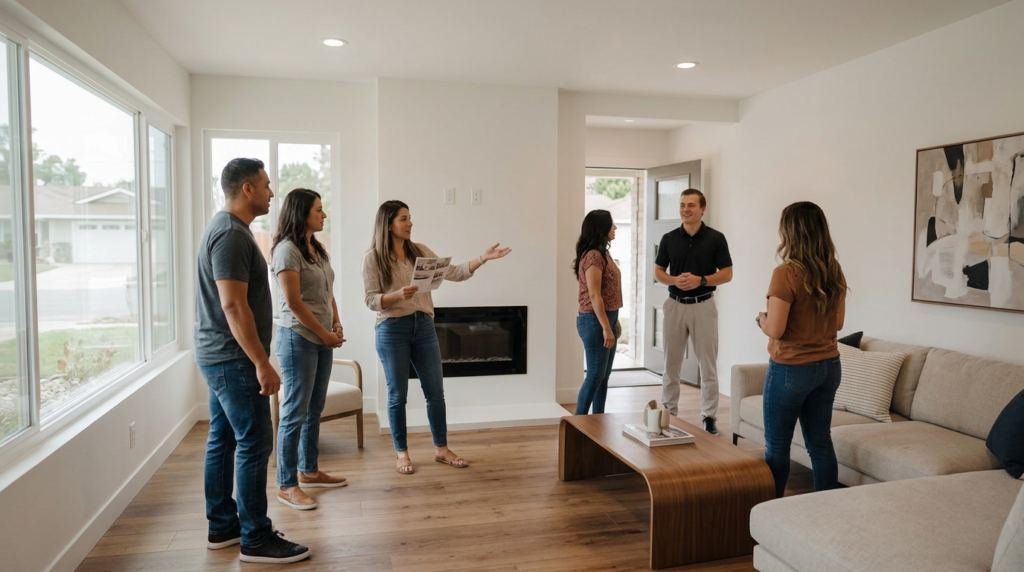
Part of that is just walking through homes with you. You walk through a house in Cypress and realize you actually hate a galley kitchen. You walk through one in Buena Park and realize the lot matters to you more than the square footage. You figure that out standing in it, not on a phone screen. Then when the right one shows up, you already know it is the right one.
What worries most first-time buyers?
Almost every first-time buyer tells me some version of the same three things.
What if the payment stretches us too thin. What if the home has problems we cannot see. What if I get overwhelmed and do not know what to do next.
Those are good questions and they deserve real answers. The first one is a conversation with a lender about a monthly payment you are comfortable with, not the maximum somebody will approve you for. Those are two different numbers. The second one is what inspections and contingencies exist for, and I get to both below. The third one is my job.
You do not need to memorize any of this. Read it once and you will know what to expect.
What are the steps to buying your first home?
Ten steps. Some take an afternoon and some take weeks. I manage all of them and you always know which one we are on.
- Consultation and strategy. We sit down, talk through your goals and your criteria, and build a plan around them. This is also where we sign the written representation agreement California has required since 2025 before an agent can show you a home. It sets what I am paid and it runs up to three months. This is the only step you have to start yourself.
- Pre-approval. A lender confirms your budget. This tells sellers you are serious and tells us exactly what we are working with.
- The search. I search the MLS, my network, and off market opportunities. You get alerts the moment something fits.
- Tours. We walk homes together. Ask everything.
- The offer. We study what has actually sold and structure an offer around your goals.
- Negotiation. Submitting the offer is just the beginning. Usually there is some back and forth before an agreement is made.
- Acceptance and escrow. The contract is signed, escrow opens, and your contingency clocks start.
- Due diligence. Inspections and the appraisal confirm the condition and the value.
- Underwriting. Your loan moves through final approval.
- Closing and keys. Final walk through, signatures, funding. Then the keys are yours.
Notice where it starts. Step one is a conversation.
How long does buying a home take?
The part you control is the search, and that varies. I have had buyers find the one in three weeks. I have worked with buyers for two years.
The part with a clock on it starts when your offer is accepted. From there to keys is usually 30 to 45 days.

What does it cost to buy your first home?
Four numbers matter, and only one of them is the price of the house.
The down payment
The number one thing that keeps people renting is thinking they need 20 percent. Most people do not. I see most buyers land around 10 percent because that is usually the happy medium between the down payment and the monthly payment, and FHA goes lower than that. Saving 20 percent in Orange County can take a decade, and the market usually moves while you are saving.
The monthly payment
Nobody should be house poor. We build the budget around a payment you are comfortable with, and then work backward to a purchase price. That number moves with rates and with your down payment, so try not to lock onto one figure.
Closing costs
These are separate from your down payment and they cover loan fees, the appraisal, title and escrow, prepaid taxes and insurance, and recording. Escrow gives you the real numbers as soon as escrow opens.
My compensation
This changed and a lot of what you will read online is out of date. California requires a written agreement between us before I show you a home, and that agreement sets what I am paid. You are the one who owes it. What we do in almost every transaction is ask the seller to cover it as a term in your offer. The seller does not have to agree. If they do pay it, it offsets what you owe instead of stacking on top, and I cannot collect more than the number in our agreement from any source. You see that number before we walk into the first house.
If you can make the monthly payment comfortably, you are in a good position to buy. The actual dollar figures are in the guide, and your real numbers come from a lender looking at your actual situation.
The guide at the bottom of this page has the real numbers on all four. Get the first-time buyer’s guide
How do you know when a house is the one?
Here is a pattern I see all the time. A buyer finds a home that checks their boxes. Then they start overthinking. The kitchen could be newer. Maybe the next one is perfect. So they wait, and someone else buys it.
There is no perfect home. I tell my buyers to use the 85/15 rule. If a home gets you 85 percent of the way there, that is a home worth considering. The other 15 percent might be square footage that runs a little short, a yard smaller than you wanted, or condition that is not as turnkey as you hoped.
Come up with your top few boxes that are most important, your non-negotiables. That should really be three to four, and the rest you still come up with, just know you might have to compromise. For me and for most people the big ones were price, location, and bedroom count. Outside of that I had to compromise. Condition, size, where it sat within the neighborhood.
So think macro, not micro. When you find a home you can imagine owning, own it.
What goes into an offer?
People think an offer is a price. It is six decisions, and the price is one of them.
- Price. What you pay.
- Money up front. Your earnest money deposit and your down payment. This is what shows a seller how serious and how solid you are.
- Timing. The close of escrow date, and possession, which is when keys actually change hands. Those are two different things and people mix them up.
- What stays with the house. More comes with it by default than people expect. Built-in appliances, light fixtures, window coverings, ceiling fans, garage door remotes, pool equipment, the solar system, even the light bulbs. A TV on the wall, freestanding speakers, and furniture do not. If you want something that is not automatically included, it has to go in the offer.
- Contingencies. Your window to verify the condition, the value, and your financing, and to review what the seller knows about the property.
- Who pays what. Escrow, title, the reports, and any credit from one side to the other.
Price is only part of what makes an offer attractive. Timing, certainty, and convenience all matter to a seller, and sometimes one of them matters more than money. I look for what the seller actually cares about and shape the rest around it.
The other thing worth knowing is that the list price is a starting point, not the value. Some homes are priced low on purpose to create competition. Others are priced high with room to negotiate. What has actually sold tells us which one we are looking at.
What happens after your offer is accepted?
This is the stretch between that phone call and your keys. Usually 30 to 45 days. Five things happen and I coordinate all of them.
Escrow opens
The contract is signed, your deposit is wired to escrow within three business days, and you lock your rate. Your contingency clocks start here.
Inspections and disclosures
We schedule inspections immediately. The seller has seven days after acceptance to deliver their disclosures, which cover everything they know about the property. I review the reports and the disclosures with you and flag anything that changes our strategy.
Appraisal and underwriting
Your lender orders an independent appraisal to confirm the home is worth what you agreed to pay, while your loan moves through underwriting.
Final walk through
A few days before closing we walk the property one more time to confirm it is in the condition you agreed to.
Signing and funding
You sign, the lender funds, the county records the sale, and escrow releases the keys.
One rule that protects your money. Before you wire anything, call escrow directly to confirm the wire details. Never trust wire instructions that arrive by email alone. Wire fraud is real and that one phone call prevents it.
Can you back out?
This is the biggest question buyers have, and the answer is yes.
Your offer includes contingencies. While a contingency is in place, you can cancel and keep your deposit. The inspection contingency confirms the condition of the home. The appraisal contingency confirms the value matches the price. The loan contingency confirms your financing is approved. And you get time to review everything the seller discloses, the title report, and the HOA documents if there are any.
All of them default to 17 days from acceptance. Those dates can be negotiated shorter or longer when we write the offer, and shortening them is one of the things that makes an offer more attractive to a seller.
To keep a contingency you do nothing. To remove one you have to deliver it in writing. And if a deadline passes and you have not removed it, the seller cannot cancel on you that day. They have to serve you a notice to perform first, which gives you at least two more days. I will tell you exactly when each one comes and goes, so you always know where you stand.
If the fear of being locked in is what has kept you on the sidelines, this is the part to remember.
What if the home has problems?
Every inspection report has findings. Every single one.
The report is not a verdict on the home. It is information, and information is leverage. We inspect before your contingency period ends, which means you see the true condition of the home while you can still negotiate or walk away.
A general home inspection covers foundation, roof, HVAC, electrical, and plumbing. A pest and termite inspection covers wood destroying pests and dry rot. A sewer line scope checks for root intrusion and pipe breaks.
After the report you have five options. Accept it as is. Request repairs. Request a closing credit, which is the most common path. Renegotiate the price. Or walk away. Which one makes sense depends on what the report actually says and where we are in the negotiation, and that is a conversation we have together.
Austin’s take
Right around the time we write an offer, most of my buyers feel a wave of nerves. It makes sense. Writing an offer means your next chapter starts to feel real.
I remember when my wife and I were buying our home. We had our son, she was pregnant, and we were purchasing at the top of our pre-approved amount. It was extremely exciting and then once our offer got accepted, I started looking at the payments, overanalyzing the home, and wondering if I was making a mistake. That is so normal. I knew to take myself back, take a break, and go back to my goal from the beginning. To buy a home for my family where we can live our best life.
I am here as your realtor, but I am here for that part too.
“He truly understood my situation, was always available, and explained every step clearly, which took away all the nerves of being a first-time homebuyer.”
Kurtis Z.
Where I work
I work with first-time buyers across North Orange County. Cypress, Buena Park, Anaheim, and the cities around them.
If you want to know what a specific city is actually like before you start looking, start here:
Common questions from first-time buyers
I am a year or two out. Should I wait to reach out?
No. The earlier we talk, the better your plan is. We map out your timeline, connect you with a lender so you know your real number, and start walking through homes so you learn what you actually want. By the time you are ready, the decision is easy because you have already done the learning.
How much do you need for a down payment to buy a home in Orange County?
Less than most people think. Most first-time buyers I work with put down around 10 percent, and FHA loans go lower. The tradeoff is that a smaller down payment means a higher monthly payment and mortgage insurance until you reach 20 percent equity. A lender can give you your real number in a 20 minute phone call.
Can you back out after your offer is accepted?
Yes. Your offer includes contingencies for the inspection, the appraisal, your loan, and your review of the seller’s disclosures. While a contingency is in place you can cancel and keep your deposit. All of them default to 17 days from acceptance unless you negotiate different dates in the offer. Even if you miss a deadline, the seller has to serve a notice to perform giving you at least two more days before they can cancel.
How long does it take to buy a house in California?
From accepted offer to keys is usually 30 to 45 days. The search before that varies a lot. Some buyers find the right home in a few weeks and some look for a year or more, which is why starting early matters.
Who pays the buyer’s agent in California?
You do, under a written agreement you sign with your agent before they show you a home. Then you ask the seller to cover it as a term in your offer, which most sellers in this market still agree to. If the seller pays it, it offsets what you owe rather than stacking on top, and your agent cannot collect more than the amount in that agreement from any source combined. You see the number before you tour anything.
What comes with the house when you buy it?
More than most buyers expect. Built-in appliances, light and plumbing fixtures, window coverings and their hardware, ceiling fans, garage door remotes, pool and spa equipment, water softeners, in-ground landscaping, the solar system, and even the light bulbs are included by default. A wall mounted TV, freestanding speakers, and furniture are not. Anything you want that is not automatically included has to be written into the offer.
What if the appraisal comes in low?
We renegotiate the price, meet somewhere in the middle, or cancel under the appraisal contingency. A low appraisal is leverage, not a crisis. It means an independent third party says the home is worth less than the agreed price, and the seller now knows the next buyer will likely hear the same thing.
Can family help with the down payment?
Yes. Gift funds from family are common and allowed on most loan programs. Your lender will walk you through the paperwork to document it, and we can talk through how it changes your numbers.
What if the inspection finds something serious?
Every inspection report has findings, so a long list is not by itself a reason to walk. When something real turns up you can request repairs, request a credit, renegotiate the price, or cancel under your inspection contingency and keep your deposit. You see the report while you still have all of those options.
Get the first-time home buyer’s guide
The guide goes deeper than this page. Real numbers on the down payment and closing costs, how we structure an offer to win, the full escrow timeline, and what to do at each step.
By submitting this form you agree that Austin Criss may contact you by phone, text, or email about buying a home. Message and data rates may apply. You can opt out at any time.
Austin Criss, REALTOR®, RE/MAX Tiffany. DRE No. 02128057. 714.600.1176. austin@austincriss.com
Keep reading